Every month, I get dozens of messages on Instagram from parents, grandparents, and caregivers who’ve just heard the words “agenesis of the corpus callosum (ACC)” for the first time. Some are moms still pregnant, scared about what’s ahead. Others are grandparents wanting to know what life might look like for their grandchild.
This is our story—not because it’s the only story, but because it’s ours. My daughter, Lillie, is seven, and she was born with ACC. Around here, we call it her “race car brain”—because it works differently, but it’s powerful, fast, and uniquely hers.
Why a Toolbox Matters
ACC shows up differently in every child, but one thing is universal: you need strategies. Structure, supports, accommodations, and resets are what make our life work.
We’ve spent seven years building a toolbox—things we use daily, things we’ve tried and ditched, and things we’re still experimenting with. None of them are magic fixes. But together, they help Lillie thrive and help us as a family keep moving forward.
Structure and Routines
Executive functioning is a struggle for Lillie, which means breaking down big tasks into small steps is essential. Our toolbox here includes:
- Visual timers: five-minute and two-minute countdowns, just like you’d use with a toddler. They still work in grade school.
- Truth Brush: a toothbrush tracker that times how long she’s brushing and gives her a visual of which areas she’s missed. It turns frustration and compliance into motivation and fun.
- Picture icons: on her bedroom wall and on her school desk to guide her through routines.
- Calendars and countdowns: I print a three-month wall calendar on engineering paper for my office, so she can look ahead. We make paper countdown chains for events she’s excited about. We also use visual calendars with icons for activities in her room for the week and on her desk for the day. She also loves her agenda/planner for school with stickers and color coded activities.
- Reward charts: when a behavior is draining the whole family, we use charts to redirect her energy and motivate change.
Predictability is her lifeline. These tools make the invisible visible and help her feel in control.
Sensory Supports
Because Lillie is sensory sensitive (not sensory seeking), not all classic tools work for her. Weighted blankets and compression clothing were overwhelming.
What does work:
- Sensory bins and fidgets: hands-on tools she can control.
- Crafting: which, I’m convinced, doubles as sensory therapy. It keeps her hands busy and her brain calm. Beads to string for a necklace.
- Chewy/crunchy candy or gum: for proprioceptive input, especially when she’s on edge.
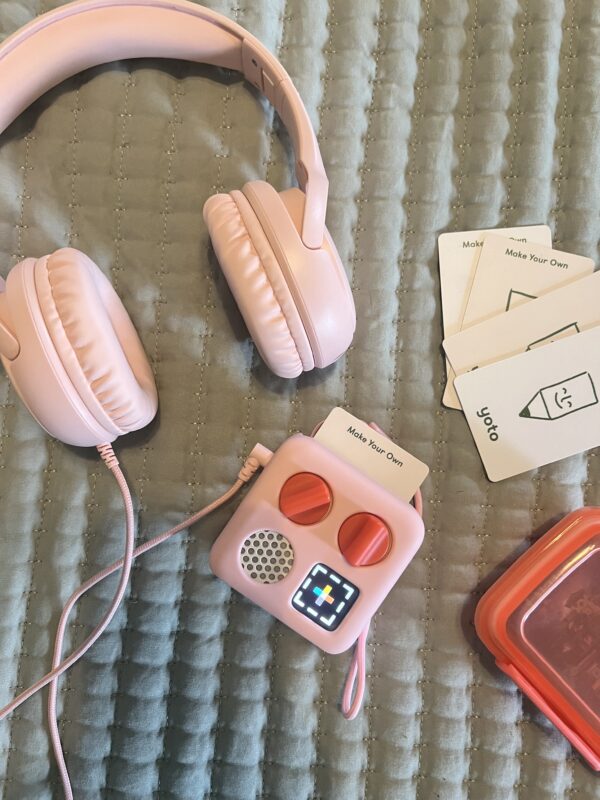
- Headphones: used selectively for noise overload in places like the cafeteria.
These small things give her control when the world feels too loud.
Sleep
Sleep can make or break her pitcher of water. We’ve tried melatonin and white noise, but what works best is routine.
- Bath every night (when possible): helps her body calm down.
- Consistent bedtimes: she naturally wakes and sleeps with the sun, which works beautifully in winter and not-so-beautifully in summer. The closer we can get to bedtime, even on the weekends, the better she sleeps. Again, even in grade school, her sleep in more like a structured toddler sleep schedule at night.
Sleep is still a work in progress, but anchoring it in routine helps.
Therapies
Therapies have evolved as she’s grown:
- Play therapy (age 4–5): helped her name emotions and build a foundation for expressing herself.
- Occupational therapy (age 5–7): focused on frustration tolerance, social skills, and repairing after conflict. It was less about skills and more about relationship, which she needed.
- Cognitive Behavioral Therapy (CBT, now): a new phase, based on recent assessments, that gives her tools for thought patterns, anxiety spirals, and coping strategies.
She knows what she should do when she’s angry or upset—deep breathing, hitting a pillow—but in the middle of a meltdown, she often can’t access those tools. Therapy helps her practice in calm moments so, hopefully, she’ll reach for them in the hard ones.
Sibling Strategies
Her brother feels the ripple effects of her race car brain, so we’ve built tools for him too:
- One-on-one time: each kid gets special “dates” with us, to balance the focus.
- Shared language: we’ve given both kids words to describe her brain so he understands she’s not “getting away with it,” but processing differently.
- Honesty: sometimes she uses her brain as a crutch. We name that too, so he knows it’s not an excuse for everything.
It doesn’t erase his frustration, but it validates his experience and helps him feel seen.
Parent Coping
The mental load is heavy. More appointments, more therapy, more advocacy at school. And when she doesn’t sleep, we don’t sleep.
Our coping toolbox:
- Weekly reset nights: for a long time, each of us had one evening a week to ourselves. Monday nights I went to the gym and a walk around Target with a girlfriend. Tuesday nights, my husband would go to golf league or grab dinner with a friend. We can't do this as much in our current season of life, but I know that this helped us for a really long time.
- Weekends away with friends: now that sports and activities crowd the weeknights, we lean on occasional resets—together or separately. We frequently travel without our kids (maybe 2-3x a year), and when we can, we invite friends into the trip as well.
- Two date nights a month: to stay connected as a couple. We would love more, but again, life and other obligations get in the way.
- Parent-kid dates: so both kids get special one-on-one attention.
We’ve learned that if we don’t fill our own pitchers, we can’t help fill hers.
What Works, What Doesn’t, What’s Next
The truth is, our toolbox is always evolving. Some things work for a season and then stop. Some things we try and never use again. Some things, like visual timers and routines, are lifelong supports.
If you’re just starting out, don’t feel like you need to do everything at once. Pick one or two strategies, try them, and adjust. Every race car brain is different. What matters most is building a toolbox that works for your child and your family.
If you’re new here because ACC has become part of your story, welcome. You’re not alone.
I’ve written more about our life with ACC—the joys, the struggles, and everything in between. You can find all of those posts here.
Because a race car brain doesn’t mean a broken brain—it means a different kind of magic. ✨